
Missions Resources
Why Church Planting?
August 12, 2025
by Justin Burkholder
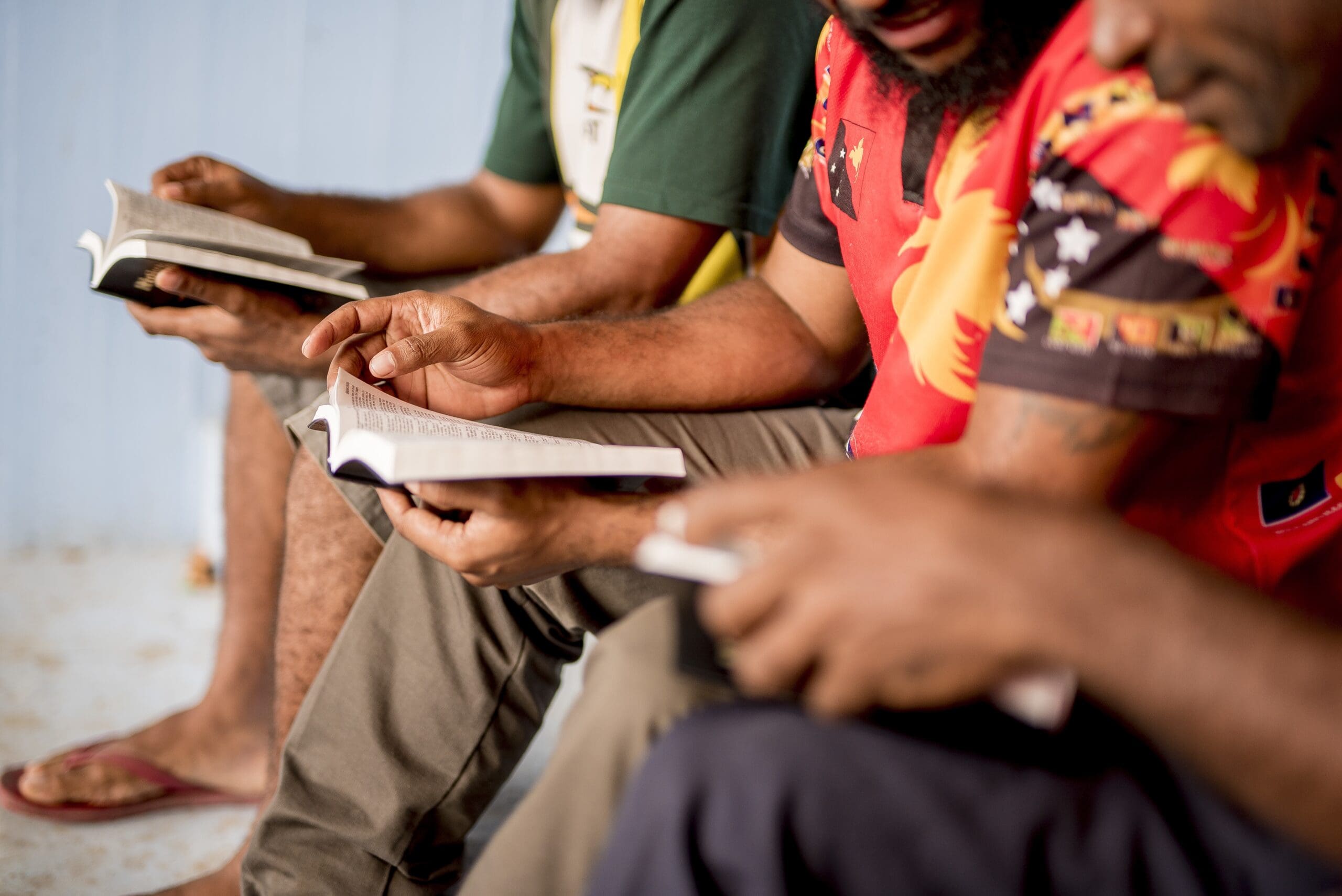
At TEAM, we’re often asked, “Why church planting?” Sometimes the question comes with genuine curiosity; other times, it is tinged with skepticism. For some, church planting represents a strategy from a bygone era, bringing to mind suits and ties, pews and hymnals, sermons in aging buildings. Perhaps those images evoke memories of church experiences that felt stale. Or, even harmful.
Given the brokenness of our world, it is a fair question. Why plant churches when there are so many urgent needs, refugees to serve, trafficking to fight, justice to pursue, poverty to alleviate? Haven’t we planted enough churches?
This question often arises from a false dichotomy: that social good and church planting are in competition. They are not. Quite to the contrary, Scripture reminds us that planting churches is central to God’s plan for healing and transformation.
So why plant churches?
God’s plan has always been to form a family.
From the beginning, God has been gathering for Himself a family—image bearers who live for His glory. He chose and promised to bless Abraham so that all nations would be blessed through him. Later, He states that Israel is to be a “kingdom of priests” so that His presence and purposes would be displayed among the nations.
As Christopher Wright says, “God’s mission involves God’s people living in God’s way in the sight of the nations.” [1]
This family grows as people submit to King Jesus, repent, and believe the gospel. When Jesus sends His disciples to make more disciples, He is inviting others into this family. Church planting is simply about creating new communities where more people can be welcomed into God’s family.
God’s family is global.
God’s intention was never to limit His family to ethnic Israel. The trajectory of Scripture moves toward Revelation 7, where a multi-ethnic people from every tribe, tongue, and nation worship together. From Abraham to Acts, God is actively drawing people from all nations into His family.
Paul captures this in Ephesians 2:16 saying that God’s purpose was “to create in Himself one new humanity.” All who are in Christ are now “members of God’s household” (v. 19). This is not just theology, it is a call. We have brothers and sisters across the world who belong in God’s family but have yet to hear the invitation.
Church planting is part of joining God in His pursuit of a global family. It is a declaration that God’s love is for every people, every place.
God’s family is local.
God’s family is not only global, it is also local and embodied. Throughout Scripture, God works in specific places, cultures, and moments. He gives Israel a land, a law, and a mission in the midst of surrounding nations. Jesus enters history at a particular time and place, interacting with real people like the Pharisees, the poor, and political leaders. He demonstrates what the arrival of God’s Kingdom looks like.
The New Testament letters are addressed to real churches in real cities facing real challenges. They are taught how to live out the ethics of God’s Kingdom right where they are.
Local expressions of God’s family are signs and foretastes of God’s Kingdom.
So back to the question at hand. Why plant churches when there are so many urgent needs, refugees to serve, trafficking to fight, justice to pursue, poverty to alleviate? In every local community we see these urgent needs. Sin expresses itself in unique ways, whether through injustice, corruption, inequality, or displacement. But if in every context there were a family of local believers, they are best positioned to participate in God’s redemptive purposes. The local church in that context becomes a contrast society, a visible sign of what life under God’s reign looks like in that particular culture.
As Michael Goheen states, “The church itself must be a transformed body, a picture of the social order that God intends for human life. Mission is first of all the life of a contrast people, the radiant demonstration of God’s creational design for human life…” [2]
Churches are not ends in themselves. They are outposts of the Kingdom, gathered families that worship, learn, and are formed in Christ, then scattered as ambassadors of reconciliation in every sphere of life.
We plant churches because God uses churches to carry out His mission. Through the lives and vocations of ordinary believers, the Kingdom of God breaks into neighborhoods, cities, and cultures. Through the Church, God invites the world to see a different story – a better story – one of hope, justice, redemption, and transformation.
That’s why we plant churches.
[1] Wright, Christopher J.H.. The Mission of God: Unlocking the Bible’s Grand Narrative (p. 470).
[2] Goheen, Michael W.. A Light to the Nations: The Missional Church and the Biblical Story (p. 198).
Related articles