
Missionary Life
The Word in Their Heart Language: Bible Translation Ministry in Chad
August 27, 2026
by Claire Shiver
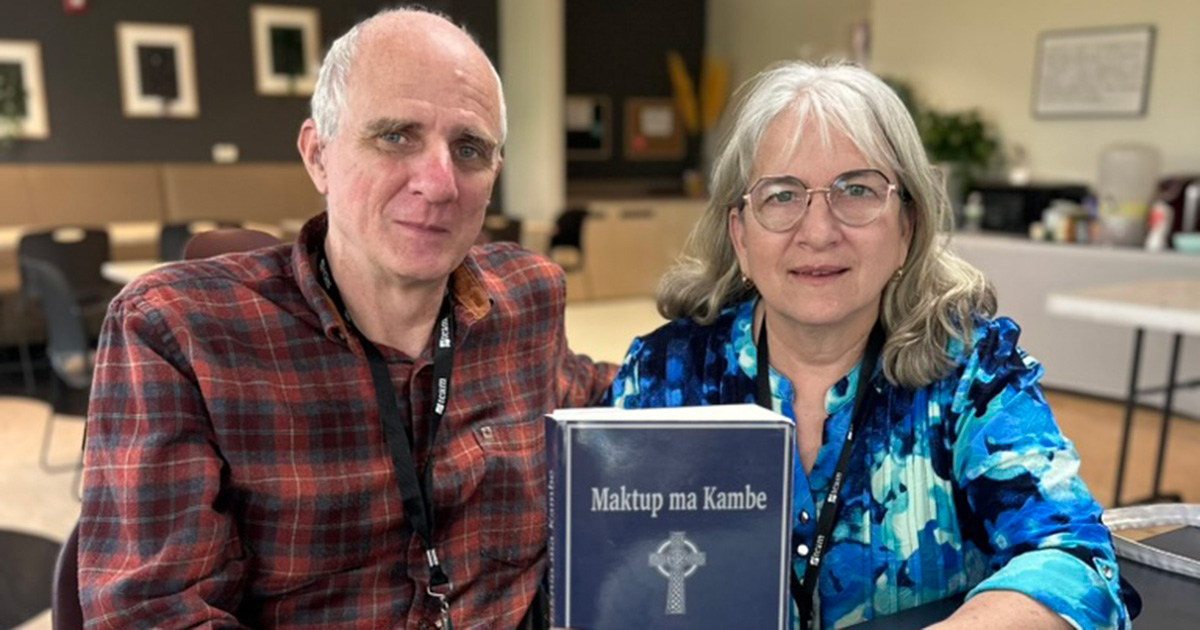
The Kwong people have never had access to a printed Bible before. Now, after nearly 30 years of a bible translation ministry in Chad, Africa, the first copy of the New Testament is on its way to print.
The large, heavy book lay on the table in front of the couple. The cross on the front indicated that it was a Bible, but this Bible hadn’t just been purchased at a local bookstore. This copy of the New Testament has been in the process of being translated for nearly 30 years.
Mark arrived in Chad in 1989 to work on Bible translation. He met his future wife Diane there and they married in 1999. Although they came from different backgrounds and organizations, their hearts were focused on the same thing: making sure that people had access to the Bible in their heart language. Diane shares: “Both of us went to Chad, even separately, with the goal of translating at least the New Testament into a [new] language.”
The Need for a Bible Translation Ministry in Chad
There are over 130 indigenous languages in Chad, each of which needs its own Bible translation. Mark and Diane worked on just one – the Kwong language. There have been a few Kwong believers since the late 1950s, and established churches since the 1980s. However, the Kwong believers have never had the printed Bible in their own language.
Before the Bible could be translated into Kwong, there was a lot of groundwork that needed to be laid. Mark explained: “I began by learning the language, developing an alphabet, writing a grammar, developing a dictionary, and then learning to speak the language. In 1995, I preached my first sermon in the language, which was pretty awful, I’m sure, and then also began to translate.”
“We saw Bible translation as a part of something much bigger.”
The translation work was slow, but that’s because it was intermixed with other important ministries. Although they describe the Bible translation as their “flagship ministry”, Diane shares, “Along the way, we saw lots of other needs and we have diversified to work with malnourished kids, work with the church, teach young people, do kids ministry, work with the Christian grammar school, even start an FM radio station. So we ended up doing a lot of other things which slowed down the Bible translation.”
Mark expounds, “We saw Bible translation as a part of something much bigger. Namely, the development of the church, which involved a lot more than just producing this Book, but training pastors, raising up a new generation, dealing with social needs like malnourished children.” Diane adds, “We set a goal to do whatever it takes to see the church established. And that’s why we ended up doing so many other things.”
Overcoming Obstacles
Another part of the translation work that slowed things down was the sheer complexity of how to accurately represent Biblical truths in the Kwong language. Mark shares: “Translating the Scriptures into these languages is very, very difficult. Just a few examples: Translating the whole notion of hope was very difficult. …part of that is because hope, even in English or in Greek or in French, is a very slippery word, depending on whether you use it as a noun or as a verb, whether it’s something that you’re pretty sure of or something that you’re not so sure of. Paul says, ‘I hope to come to you soon.’ Well, that’s pretty unsure, but then he talks about the Gospel hope. And that’s a pretty sure thing.”
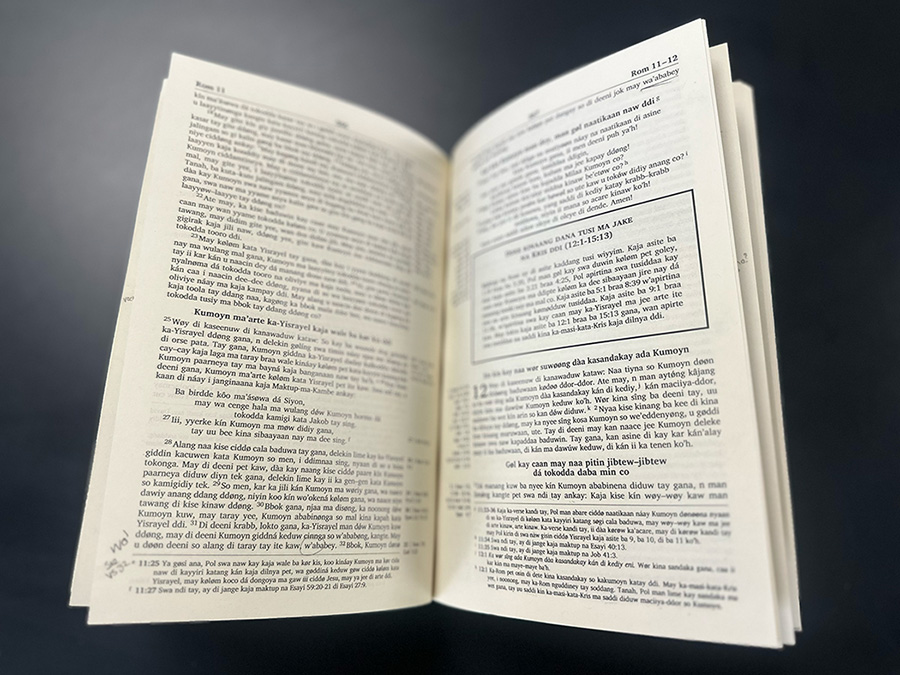
Another concept that was difficult to translate was “word.” Mark says, “The book of John begins with, ’In the beginning was the Word, and the Word was with God, and the Word was God.’ But the standard word in Kwong for ’word’ also means ’problem’. So a word-for-word translation of this verse gives you something like ‘In the beginning was the problem’. And you can guess what the rest of it sounds like. Well, what do you do with that?”
The Language of Their Hearts
Although there were hurdles and roadblocks during the translation process, as well as meaningful ministry detours, the New Testament has now been fully translated into Kwong. The goal is to get it printed later this year and sent to Chad. Even though this is a major milestone in their journey, their story isn’t over yet. The couple would like to continue to work on translating the Old Testament for another 4 to 5 years before they retire.
As Mark and Diane flipped through the copy of the New Testament that lay on the table between them, the joy on their faces was evident. Some might see these years of bible translation ministry in Chad as a burden, but they see it as a privilege.
A privilege to share the word of God with a people who had never before heard Him speak in their heart language.
To read more of Mark and Diane’s earlier story of bible translation ministry in Chad, check out our blog. If you have a desire to share the Good News of Jesus with those who don’t yet have access to it in their heart language, explore missions opportunities with TEAM today!

Subscribe to our email list to receive more global missions stories and resources and follow us on Facebook, Instagram, and LinkedIn.